Prodigal Son

Bailey Lucero • May 4, 2026

The Prodigal Son: 

In the passage Luke 15:11-32 we see the son go on a journey from taking his share of his inheritance from his father, running away, spending all the money, and landing in a place of brokenness. 
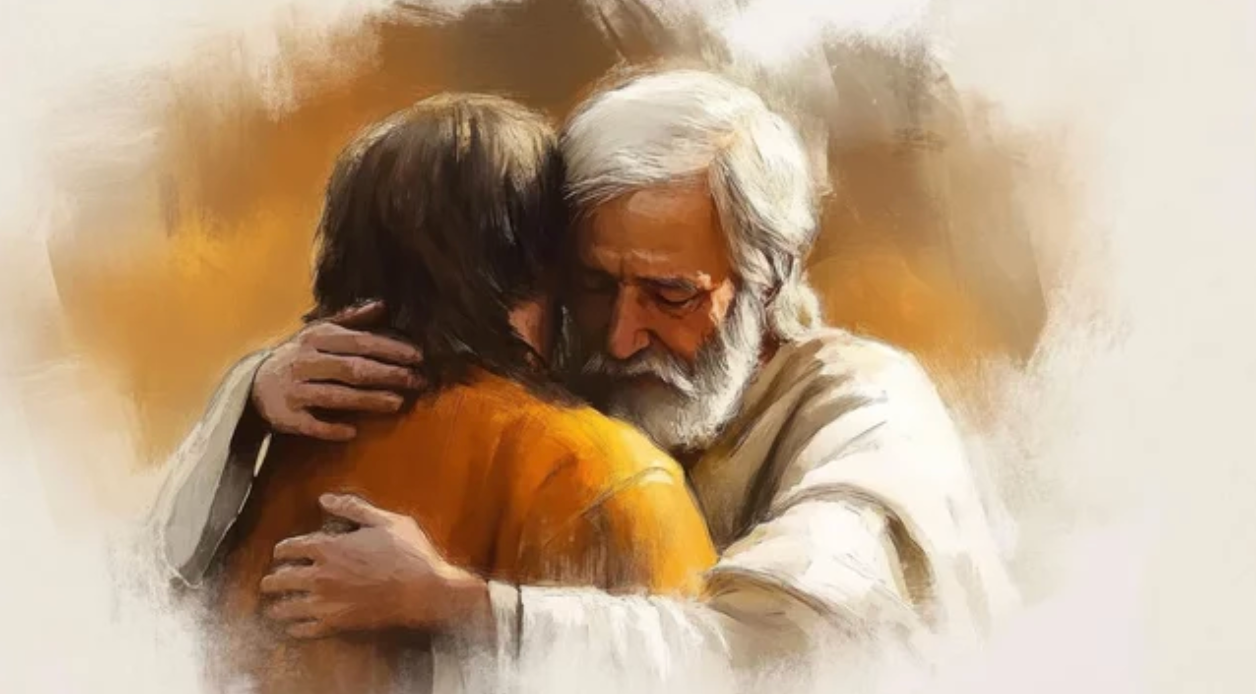
Luke 15:11-32

Lately I have been discouraged thinking about those in my life that have walked away from their faith. Along with this sadness I have also experienced the joy of those who walked away and came running back to the Lord after many years. With both of these in mind the Lord has been reminding me and opening up my eyes to truth in the prodigal son parable. It’s been teaching me the ways I can respond to those who walk away from their faith, but also how much I can be like each of these people in my own life. 


The Prodigal Son: 

In the passage Luke 15:11-32 we see the son go on a journey from taking his share of his inheritance from his father, running away, spending all the money, and landing in a place of brokenness. 


Proverbs 3:5-6 

Trust in the Lord with all your heart,

And lean not on your own understanding;

In all your ways acknowledge Him,

And He shall direct your paths.


With this verse in mind I was convicted about how I can be like the son in my everyday decisions. I can choose to abide in God's ways and path, or I can take things into our own hands. In this parable we see the son walk away from the father and live in a way that is dependent on his own desires. Ultimately, it leads him to a place of brokenness and realizing how good he had it living with his father. When we make decisions in our life and if it is not in line with the Lord's heart we are set to experience brokenness and separation from our Father. We need to know His ways and ask him for help when we are going through life because His ways are better than ours and will lead us to a life glorifying Him. 


The Older Son:

We see the older son's response in Luke 15:25-32. His brother runs back from being lost to receive open arms from his father with a celebration. But, the older brother is upset and won’t celebrate the return of his brother. He responds to the situation with bitterness and jealousy. His father tells him that he could have asked for any of those things. As believers we can find ourselves like the older brother. We can get caught up in our own pride or even in our own troubles that we forget that we can ask our Father for anything and He will walk with us through these situations. Sometimes we even miss out on all the good God is doing around us and don’t take the opportunity to celebrate. 


The Father:

As we have seen through these verses the father is waiting for his lost son to come home. When he sees his son return he runs to him and celebrates. I know a lot of times when I have heard teaching on this story it’s about God to us. In my struggles with loved ones walking away from their faith I started to learn that this story can also apply to my response. The father had already forgiven his son before he got home and was waiting in anticipation for his son to come home. In my own life I sometimes get caught up in feeling upset that someone has walked away from their faith. I am going to God out of sadness which is not bad, but also I am not waiting in expectation for God to work in their life and for them to come back. 


Reflection:

- How can you be like the prodigal son, the older brother, and the father in your own life? 

- How has this story changed your ways of how you respond to loved ones who have walked away from their faith?


In all of these positions I can find myself being like them in my faith. Each day I need to trust in the Lord's plans and seek for His understanding. Each day I can pray for the fruit of the spirit (Galatians 5:22-23) and ask God to help me grow in those areas. In all of these positions it is meant to work on my heart posture and to grow in seeing God's ways above my own.


FCA NOCO Blog

By Shane Sorrentino March 4, 2026
Living Intentionally from John 3:16 Scripted with Bailey Lucero's support 
By Scott Miller February 2, 2026
I work with several churches and pastors in Northern Colorado. Individual conversations that reflect passion, purpose and vision to see the gospel come alive in our community. I always walk away from these conversations with pastors encouraged and inspired because the theme is often very similar. Although most of the conversations echo similar passions, I wonder what does it look like for “The Bride” of Jesus Christ to be intentional about unity between churches, not just within churches? John 17:21 On the night before the cross, Jesus did not pray for comfort, safety, or success. He prayed for unity —that His followers would be one, just as He and the Father are one, so that the world might believe. A unified church is not optional; it is missional. Unity flows from shared life in Christ, not shared preferences. Henri Nouwen reminds us that Christian unity is forged in love, not likeness: “Community is not an emotional feeling, but a decision to love one another.” True unity is not the absence of tension, but the presence of grace. The church becomes one body when we choose to bear with one another in humility and forgiveness, rooted in our common identity in Christ. Unity is visible when the gospel is bigger than our labels. Francis Chan challenges the church to reflect the prayer of Jesus: “Our unity should be so radical that it makes the world question why we are different.” When churches prioritize the fame of Jesus over their own platforms, unity becomes a compelling witness. The watching world should see cooperation, not competition. Unity is something we protect, not something we manufacture. Timothy Keller wisely notes: “Christians are one in Christ; unity is not something we create but something we recognize and live out.” (paraphrased) The gospel already unites believers across denominations, cultures, and generations. Our calling is to live consistently with that reality through love, patience, and shared mission. Unity is strengthened through shared mission in the community. In many towns, unity becomes tangible when churches work together—joint youth outreaches, shared benevolence ministries, community prayer gatherings, disaster relief efforts, FCA partnerships with schools, or pastors praying together across denominational lines. When churches lock arms to serve the poor, reach students, and proclaim Christ, the body moves as one. Application: Answering the Prayer of Jesus Examine your heart: Are there prejudices, preferences, or past wounds that hinder unity? Confess them to Christ. Pray intentionally for other churches and leaders in your community by name. Look for ways to serve alongside believers outside your own congregation. Speak well of Christ’s church—even when it’s imperfect—remembering she is His bride. Ask this simple question: “How can I make unity easier, not harder, in the body of Christ?” Jesus prayed for unity on His way to the cross. May we honor that prayer—not just with our words, but with our lives—so that the world may know that the Father sent the Son.
By Keighan Miller September 2, 2025
Scripture: “Go therefore and make disciples of all nations…” (Matthew 28:19–20) “Be imitators of me, as I am of Christ.” (1 Corinthians 11:1) “…what you have heard from me… entrust to faithful people who will be able to teach others also.” (2 Timothy 2:2)
By Rachel Hariri March 14, 2025
I recently spoke at a few high schools about Loving Like Jesus. This devotional is a moderately condensed version of the talk I gave, but wanted to share with you all!
By Scott Miller March 5, 2025
For the last several weeks I have been in Galatians and Romans. I’ve been considering the life of the apostle Paul. Two primary components have surfaced for me and have been filling my quiet spaces with questions and conviction. Paul not only had a reputation, but he seemed to have a platform in every city. This platform seemed to be a result of his teaching as well as his redeemed demeanor. Every single day that Paul lived, after coming face to face with Jesus, was approached with expectation and urgency. Paul did not have a transactional experience with Jesus on the road to Damascus, he had a transformation that utterly and completely altered the trajectory of his life. Lives that are changed by transaction look more like moral reformation. Paul’s life was absolutely transformed by the love of Jesus Christ. A life that is transformed transcends our own ability to reform our behavior. Our lives transformed by the love of Jesus results in a response that alters our behavior. Paul was so keenly aware that his redemption had absolutely nothing to do with his abilities, and his life’s pursuit to be righteous. Jesus paid the debt not even Paul could pay, and the response was a captivated heart with the beauty of his savior. Paul also had significant clarity around “his sermon”. An old friend of mine wants told me that pastors sometimes take a bit to “find their sermon”. That one quintessential conviction that finds its way into every sermon they preach. For Paul, it was an amazing clarity around the gospel and the urgency to abstain, absolve and flea from false gospels. Paul was a dog with a bone regarding the gospel and how he traveled from location to location and nothing else in his life mattered much outside the gospel and the proclamation of the gospel every chance he got. The platforms that Paul had were ordained and prepared by the Holy Spirit. The gospel of Jesus Christ is what was amplified and proclaimed by Paul. I am compelled and filled with affection for the gospel, and the older I get it is quickly becoming the single thing in my life that addresses every aspect of a life long sanctification process.
By Haley Barnes February 3, 2025
In our first sermon at church this year, our Pastor mentioned the word “recalibration” and ever since, I haven’t stopped pondering upon the word. It means resetting or adjusting settings to help stay on course. Many may understand recalibration when flying a plane since pilots are consistently gauging the course to ensure they are not veering off trajectory. At home, many of us may readjust or recalibrate settings on the thermostat in our home… especially those in Colorado as we experienced a magnificent cold front across the Front Range. How does this apply to faith? That's where it stuck out to me. Our pastor shared about recalibrating to stay on course with the Lord’s plan and using references to Jeremiah 29. The Israelites were held in captivity, yet the Lord speaks in verse 5 “Build houses and settle down; plant gardens and eat what they produce. Marry and have sons & daughters; find wives for your sons and give your daughters in marriage, so that they too many have sons and daughters. Increase in number there; do not decrease. Also, seek peace and prosperity in the city which I have carried you into exile. Pray to the Lord for it, because if it prospers, you too will prosper (Jeremiah 29:5-7).” Amid exile, the Lord is speaking of building houses & settling down, getting married & multiplying. Can you imagine? In the thick of surviving exile, the encouragement is to dig into it & thrive in exile. And our pastor brought up the fact that we may not be in similar exile in Jeremiah 29, however, Peter reminds us that we are “aliens and strangers [in this world] to abstain from the sensual urges [those dishonorable desires] that wage war against the soul (1 Peter 2:11). In this world, we are captives, heaven is our home. Our world is not. So how does that reconnect to recalibration? Sometimes our situations, scenarios, and circumstances can veer us off track. And we may even be doing all the right things in the church, ministry, home, and all our relationships. But being 1-degree off course can eventually lead to miles off course. To pilots, being 1 degree off course is detrimental enough to completely change coordinate points. Similarly in walking with the Lord, being 1 degree off course is detrimental enough to cause a mission drift. A mission drift is where we get off course of what the Lord has called us to do. Recalibration is a key to helping us realign with what God has for our lives. Even if our current condition feels like exile where we can’t get out or it is harder than we called for, we must trust in the Lord because he knows the plans for us (Jeremiah 29:11). When we recalibrate to reset our settings to the Lord’s direction, we can continue to build & thrive & plant and multiply no matter what climate we are facing.
By Angie Miller October 1, 2024
I’ve been wrestling probably for a good portion of my life without really even knowing it. What do I love? Seems pretty easy right? Even where I spend my time and energy, does not really reflect what I love? Some of you will read this and others will not, but I would love to interact with you in this short writing if you would.
By Laura Immenschuh August 29, 2024
Romans 2:4 says, “it’s His kindness that leads us to repentance”. Lately, the Lord has given me a phrase to be that I have found myself asking often (and over and over), “What am I a slave to?”
By Rachel Hariri August 5, 2024
My church recently went through a series on the Holy Spirit and a key point that was made during one of the sermons was “ What God forms, He fills . ” I’ve been spending a lot of my quiet time meditating and reflecting on my relationship with each part of the Trinity and on the aforementioned point.
By Scott Miller August 5, 2024
“I hope we get to go swimming today.” “I hope the Avalanche win the Stanley cup.” I have said phrases like this all my life. I began to wonder about where does this hope come from? Hope is not an accident. Hope is an indicator, it is a bi-product of something going on within. When we refer to hope based on a circumstance or a specific context it reveals our affection, our hearts attention. It is normal and good to look forward and to anticipate things in our life that we enjoy. However most of those things are temporary. Hope that is robust, sturdy and eternal is something a bit different. Developing a hope that you can build a framework to live by is a process that takes time and begins with suffering.